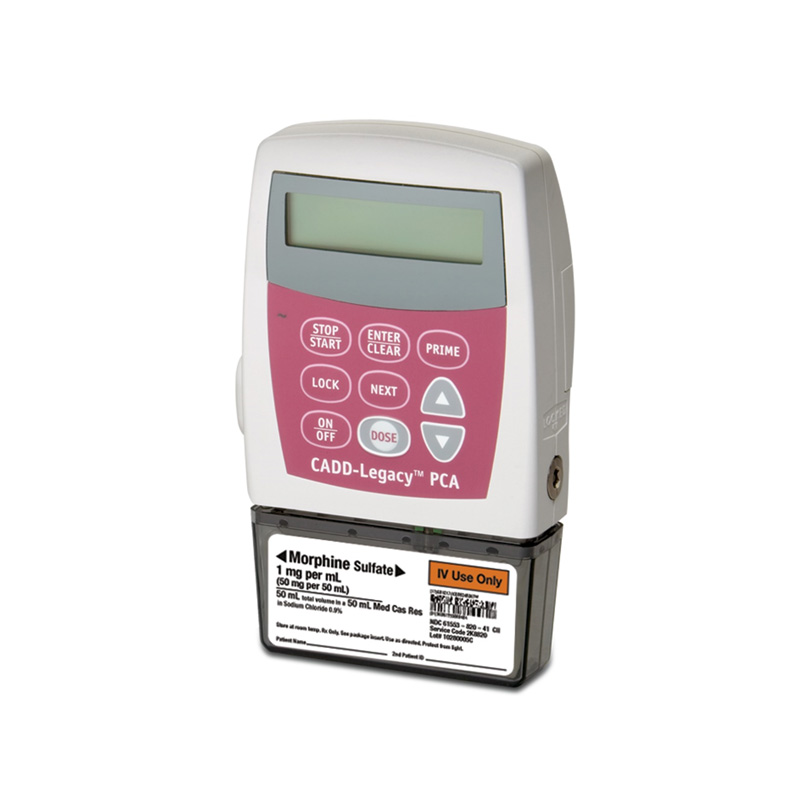
CADD® Legacy PCA
The CADD® Legacy ambulatory pump is a compact, portable infusion device for continuous or demand‑dose therapy. It supports automatic infusion, patient‑controlled or clinician‑administered doses, with built‑in safety sensors for secure medication delivery in hospital or home settings.
Key Features
- Premium Quality Equipment
- Free Installation Support
- Manufacturer Warranty
- 24/7 Technical Support
Product Description
1. Overview
The CADD‑Legacy ambulatory pump is a compact, reliable infusion device designed for continuous or demand-dose medication delivery. It supports both continuous infusions and patient- or clinician‑controlled bolus dosing, making it suitable for a wide range of therapies in hospital or home-care settings. The pump’s portability and flexibility make it especially useful for ambulatory patients who require ongoing infusion therapy.
2. Delivery Modes & Therapy Flexibility
-Continuous infusion: delivers a steady, programmed flow over time.
-Demand‑dose (Patient‑Controlled Analgesia / PCA or clinician‑administered): allows patient or clinician to trigger additional doses as needed.
-Combined modes: continuous infusion with supplemental demand doses (bolus) if therapy requires.
-Suitable for multiple delivery routes: intravenous, subcutaneous, epidural/intrathecal, or other medically approved routes (depending on therapy).
-Supports a variety of therapies: pain management, analgesia, possibly long‑term infusion needs (depending on medication and protocol).
3. Safety & Delivery Protection Features
-Cassette detection: verifies that the medication cassette is properly attached before infusion begins.
-Upstream and downstream occlusion detection: sensors monitor for blockages before and after the pump to immediately alert and stop infusion if flow is interrupted.
-Air‑in‑line detection: detects air bubbles in the infusion line (with sensitivity settings), triggering alarm and stopping infusion to prevent air embolism risk.
-Lock-out or secure access: pump can be configured to restrict unauthorized changes (for safety in patient-controlled use).
-Low‑power standby option: an ON/OFF control to place the pump into a low‑power state (e.g. during transport), conserving battery life.
-Event memory / log: records infusion history (events, alarms, doses) to support monitoring, troubleshooting or audits.
4. Programming & Usability Features
-Easy-to-read display: clear screen for programming, dose settings, alarms, and status info.
-Flexible programming: supports dosing in milliliters (mL), milligrams (mg) or micrograms (mcg) depending on medication concentration and therapy.
-Adjustable dosing parameters: allows setting of infusion rate, bolus doses, lock‑out intervals (for PCA), and reservoir volume as per therapy needs.
-User-friendly interface: menu-driven or keypad-based programming designed for ease of use, reducing risk of errors.
-Portability: small, lightweight, battery-powered — suitable for ambulatory patients, home care, or transport between care settings.
5. Technical & Physical Specifications
-Stroke volume (nominal): approx. 0.050 mL per pump stroke.
-Flow (continuous) range: from very low infusion rates up to ~125 mL/hr (depending on pump model and configuration).
-Reservoir / Cassette volumes: supports standard disposable medication cassettes of various sizes (e.g. 50 mL, 100 mL — depending on model), enabling flexibility in therapy duration.
-Power source: operates on 2 × AA alkaline batteries — optionally supported by AC adapter, allowing flexibility for ambulatory or clinical use.
-Size / Weight: compact dimensions and light weight (with batteries + empty cassette) — designed for portability and ambulatory use.
-Alarm and alert system: configured to warn for occlusion, air‑in‑line, cassette issues, low battery, infusion completion or other fault conditions.
-Compatibility: can be used with standard administration sets or compatible cassettes/reservoirs; adaptable for different medications and administration routes as approved.
6. Typical Clinical Applications
-The CADD‑Legacy pump can be used for:
-Pain management (e.g. PCA for post‑operative analgesia, chronic pain, or palliative care)
-Continuous infusion therapies (e.g. IV fluids, antibiotics, medications requiring steady rate)
-Ambulatory or home‑based infusion therapy (where portability, battery operation, and patient mobility are required)
-Situations needing flexible dosing — combined continuous + demand dosing, or patient‑controlled doses, especially for analgesia or other intermittent therapies
Technical Specifications
| Battery / Power: | 2 × AA alkaline batteries; optional AC adapter |
| Battery Life: | Depends on infusion rate and battery type (typically several hours) |
| Delivery Modes: | Continuous infusion, Patient‑Controlled Analgesia (PCA), Clinician‑Controlled Bolus, Combined modes |
| Device Type: | Ambulatory infusion pump |
| Display: | Clear screen for programming, status, and alarms |
| Flow Rate Range: | Approx. 0.1 to 125 mL/h (depending on configuration) |
| Programming Features: | Adjustable infusion rate, bolus dose, lock-out interval, total volume to be infused (VTBI) |
| Programming Units: | mL, mg, mcg (depending on therapy) |
| Reservoir / Cassette Volume: | Varies by cassette type (commonly 50 mL, 100 mL) |
| Stroke Volume: | ~0.05 mL per pump stroke |
| Weight: | Lightweight and portable (with batteries and empty cassette) |
Download Documents
No documents available for download.
Related Products
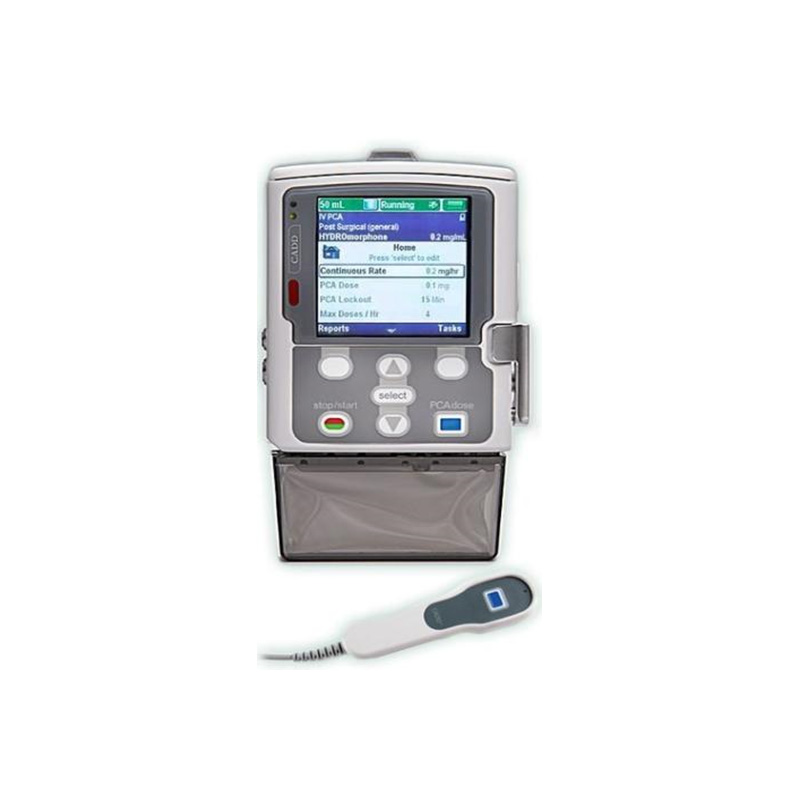
CADD Solis™ Ambulatory Pain Management System
The CADD Solis ambulatory infusion pump delivers precise, programmable medication infusion in multiple modes — …
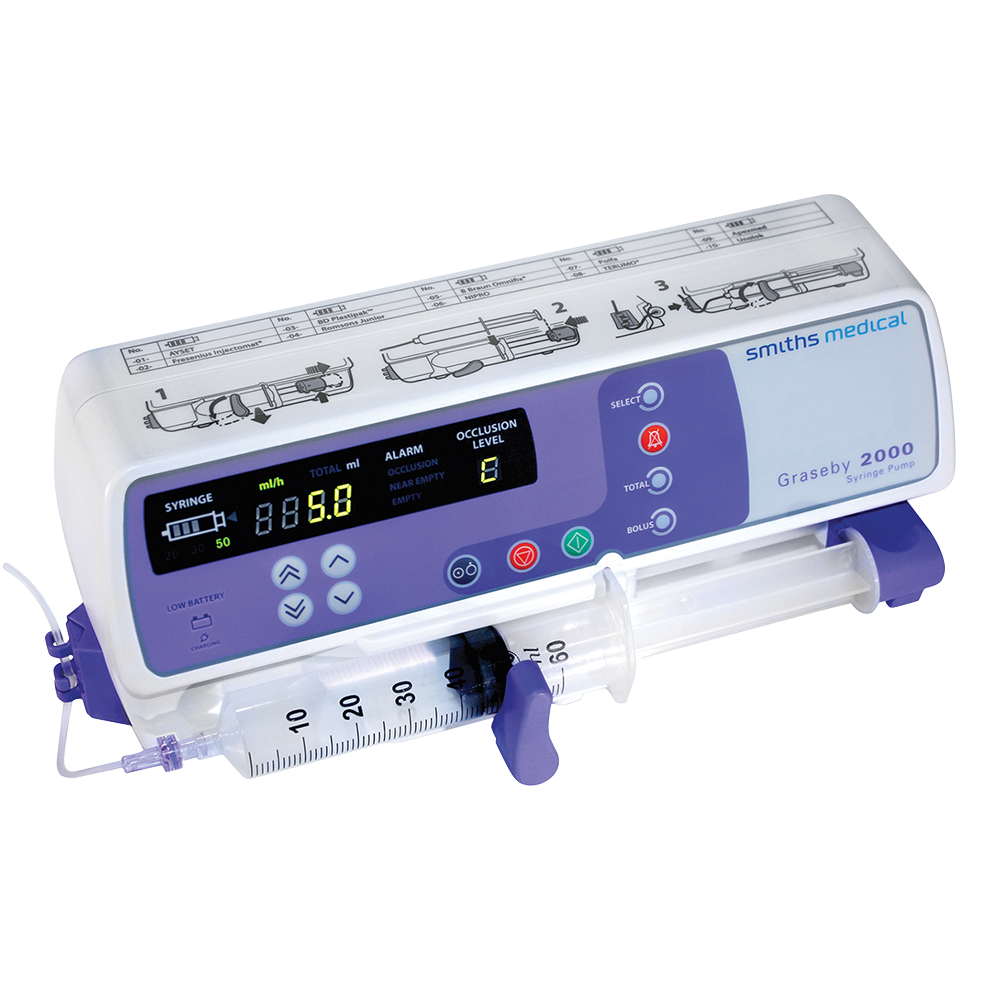
Graseby™ 2000 Syringe Pump Range
The Graseby™ 2000 and Graseby™ 2100 syringe pumps provide simple, reliable continuous infusions across a …